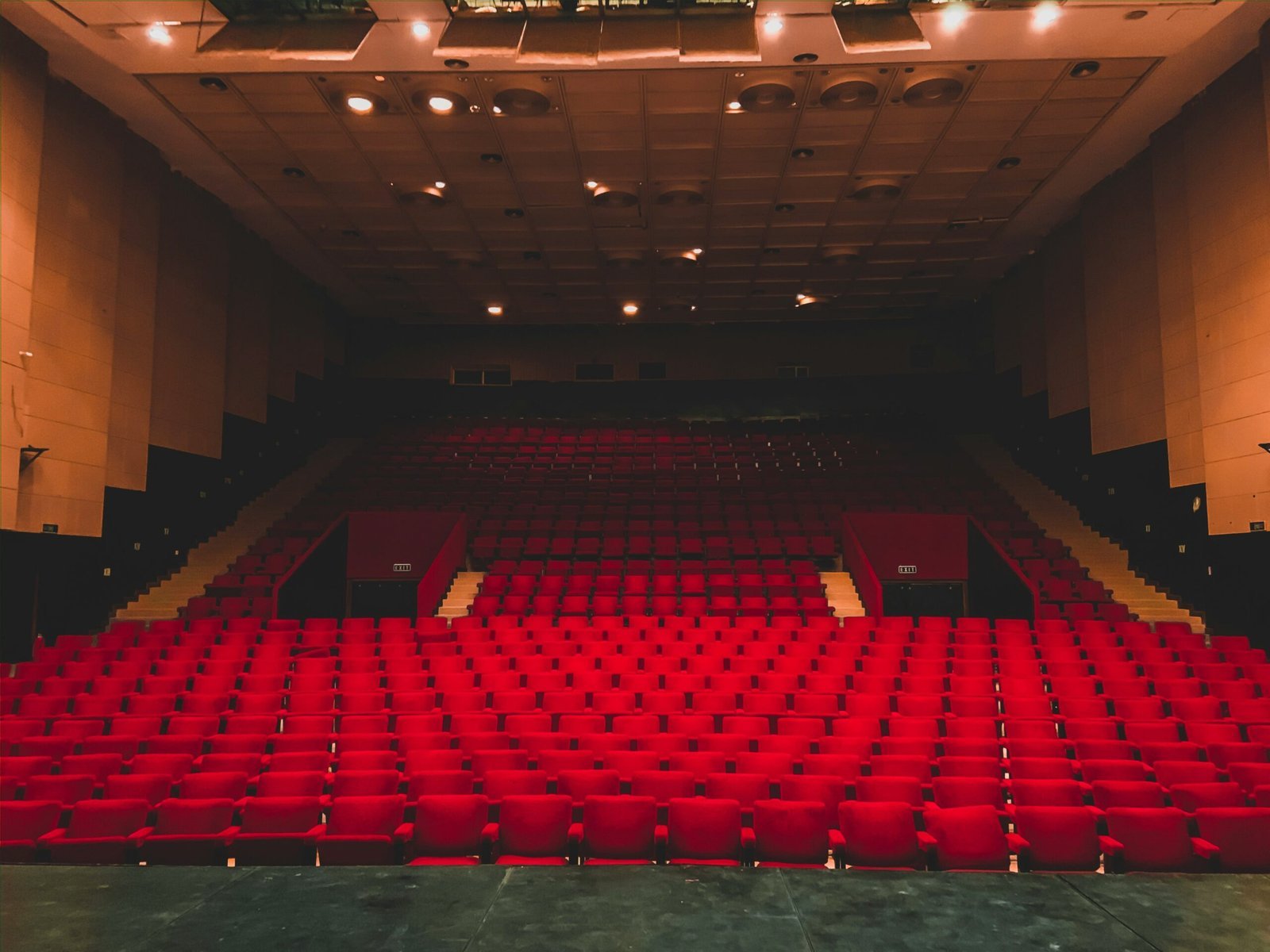
Since early May, I’ve been attending workshops, diving into playwriting, and meeting some truly wonderful new creative companions. The past four weeks have been a joy—it’s been fascinating to explore such a wide range of topics, genres, and styles across the ten short plays we’re all preparing to share.
Melbourne Writers’ Theatre recently updated its website with participant bios, and I’m now officially introduced as an emerging writer. It’s a small shift in language, but it means a lot. The thought that my words will soon be performed on stage is quietly thrilling. This will be my first tangible achievement as a writer, and that’s what excites me most.
From the Inside Out
I’ve now completed the first draft of my short play. Here’s the logline:
Zoe Grieve wants to stage the perfect funeral—for himself—but one unimpressed funeral director reminds him that no one mourns a man they never really knew.
Working on this play alongside my novel has shown me how much my writing gravitates toward questions of authenticity—the pull between who we are and who we want to be, the tension between performance and sincerity, the quiet bravery it takes to show up as yourself. A ten-minute play only allows space for a single, concentrated moment, but I’m already thinking about how this story could grow into something longer.
Every step of this process has felt alive. Last week, we met our directors to talk through character development, and soon I’ll get to meet the actors who will bring the script to life. Watching their interpretation unfold will be one of the most exciting parts of this journey.
Even if I continue working in my current job, I want to define myself as a writer by writing in the evenings and welcoming that identity with a ritual. Right now, I feel like I’m in a state of betwixt and between because I haven’t created a turning point for myself.
Even after going through the very typical, well-recognised ritual of a wedding, it still took time to feel the shift. There was a day we wrote “mother, father, me” when defining our family, and only then did something settle. That was another quiet turning point. Rituals may mark the beginning, but acceptance can take longer. Sometimes we need to name things before we can carry them.
There are times when I’m affected by the words of people around me, especially when they come from family or close friends. When something I care about is reduced to “that kind of thing,” or followed by a dismissive comment, it stays with me longer than I’d like.
It’s not easy to find people who support whatever path you take without conditions. Ironically, I’ve often received more encouragement from people who aren’t close, or who don’t really know me. Life has its own sense of humour.
Maybe that’s why rituals are necessary. They’re a way of making a promise to myself, a quiet declaration that, no matter what anyone says, I will write.
Maybe it’s also a warning. That now I’ve become a writer through this ritual, if you can’t say something kind, you can at least choose silence.
I genuinely wish more people would choose silence over judgement. Everyone has their own version of a good life, and I don’t understand those who insist theirs is universal.
In the end, I can’t control what others think or say. But I can choose what I say, and what I hold back.
I write. I am writing. And I should at least be the one who encourages that.
Have you ever noticed your car’s brand more often after buying it? Or felt like certain opportunities started appearing just as you were thinking deeply about them?
I think that’s how the universe moves when we’re sincere. When we seek something with intention, something quietly begins to shift.
Since I shared that I want to be a writer, that I’ve started writing my novel, an unexpected opportunity appeared. I expressed interest, and now here it is: my first official project as Writer Jade, not Research Jade.
Starting in May, I’ll take part in three workshops and collaborate with actors to develop a brand-new short play. Experienced playwrights, mentors, and theatre professionals will support the process. Once the script is complete, actors will bring it to life in a live showcase this August.
It feels quietly surreal.
This is a meaningful step for me. I’ll be debuting as a scriptwriter, something real I can carry with me when I introduce myself as a writer. After this project, I won’t be someone who wants to write. I’ll be someone who has written.
And it’s not a solitary process. I’ll be working alongside mentors and like-minded peers. Writing so often lives in a quiet, internal world, so I’m grateful for the chance to share space and thought with others. That gentle reminder — you’re not alone — is something I’ve come to value deeply.
I still have no idea what the script will be. It might draw from my novel or a character from it. Or it might become something completely different. I’m not sure where my creativity will land, but I know it’s a journey worth taking. I’ve even started listing who I might invite to the showcase, though I’m not sure if invitations are even allowed. Excitement is all over my nerves, and I’m letting myself feel it fully, just for now.
Don’t I deserve to enjoy and celebrate this first little milestone? 🤩
I’m the kind of person who does things right away. If someone says “let’s catch up for lunch sometime,” I’m the one who pulls out my calendar to book it. When I thought about living abroad, I didn’t just dream; I researched, discussed, told family, and made plans.
When I wanted to write a novel, I didn’t wait. I opened a document and began.
That’s how this website was born. That’s how Jade Story Attic found its place on LinkedIn. I even updated my profile because I don’t want to write in secret. Writing is part of who I am. It doesn’t need to be hidden.
At the same time, I haven’t walked away from the corporate world. I’m living the present as both: A researcher by day. A writer by night. How fabulous is that?
I meditate every day. Sometimes yoga nidra. Sometimes affirmations. Sometimes gratitude or intention setting. Rarely—visualisation.
I’ve always found manifestation-style meditations difficult. When people say, “visualise your future in vivid detail,” I see movie-like scenes that don’t feel like mine. It’s like I’m borrowing someone else’s script and photoshopping my face in.
I used to think I was just not a visual person. But I couldn’t write my future either—so maybe it’s not about images vs. letters. Maybe I just hadn’t found the real future vision yet.
Since I started writing my novel and launched this website, I’ve been overwhelmed by spontaneous images. They appear while I walk my dog Winnie, or in quiet moments when I least expect it. But they’re not just stories.
They’re about Future Jade.
One day, I saw myself holding my own published novel. The physical book in my hands. Thick. Almost 500 pages. I looked at it like I look at Winnie: full of pride, love, and joy. I wasn’t just a writer anymore. I was an author.
On another walk with Winnie, I saw my future home. A modern two-story house, with my writing room on the second floor. Three walls lined with floor-to-ceiling bookshelves. A large desk facing a mountain view. My husband and Winnie playing in the outdoor pool while I write. Peaceful. Grounded. Mine.
And once those images came, they wouldn’t leave.
That’s when Logical Jade chimed in: “Aren’t these just daydreams? Wake up. Be practical.”
And Emotional Jade yelled right back: “Shut up! This is the life I want!”
Then came Meditator Jade, the one who asks questions gently: “What’s the difference between manifestation and daydreams?“
I still don’t know where the line is. But here’s what I’ve learned:
As long as I keep writing, it’s not just daydreaming. It’s manifestation in motion. I’m writing every day. I’m finishing this story. I’ll find a way to publish it.
I may not end up in that two-story house with a mountain view. I might not become a full-time writer. But if I keep going, I will end up somewhere different from where I am now. And that’s growth.
These images, these little flashes of Future Jade, motivate me. Each time I move the story forward, I feel one step closer to her.
Do I get scared that this will all end with nothing? Of course. But that fear is part of the writing life. I’m learning to hold it without letting it hold me back.
For now, all I can do is sit in my attic each night, and write. That’s how I build the future. One word at a time.
Unfortunately — or maybe fortunately — I never really got cheers from others growing up.
When I told my parents I wanted to become a nurse, my father said, “A doctor is better.” When I said I wanted to be a lawyer, he criticised me again
“Why not judge? Why just a lawyer?”
Yes, I get it, Dad. You wanted me to dream big, to be ambitious. But at that time, all my hopes were rejected, one after another. After a few repeated patterns like this, I simply stopped telling them what I wanted, especially my father.
At school, we had exams in 13 subjects. The full mark was 1300. In one mid-term, I scored 1297. I was proud — so proud. I was at the top of the entire school. I missed just one question, and even that was a unit error in maths. I came home hoping to be praised.
Instead, I got an hour-long lecture. Why did I miss that one? Why wasn’t it perfect?
Yes, it was my mistake. But I’d hoped the rest — the 1297 points — would still matter. That I could be celebrated for what I achieved. I was 13.
After that, I stopped saying what I wanted out loud. The reaction was always the same.
Some people are incredibly skilled at finding worst-case scenarios, turning a small fault into a crisis, and dismissing anything good. Maybe someone thought criticism was motivation, but it never worked for me.
It hurts when the people closest to you become the loudest voices of doubt. I spent years standing against that energy with everything I had. It was exhausting. Frustrating. Sometimes it made me furious. Anytime I said I wanted to do something, I heard it: You can’t. You won’t. It’s a waste of your life.
It wasn’t just my parents.
When I decided to immigrate, I heard the same chorus: “You’re already too old.” “Reckless.” “You’ll fail and won’t find work when you come back.” “Your parents are ageing — how could you abandon them?” “You’re just running from reality.”
They didn’t say I was selfish — not openly — but the message was clear.
And I got it, I really did. Many of them wanted the same thing. They just weren’t brave enough to try, so they wrapped their judgment in the language of concern.
I could understand that in my head. But my heart couldn’t accept it. None of them had the right to speak to me like that. Even if I had failed, it would’ve been my failure — and more importantly, I didn’t fail. I settled in this country. I’ve built a life. And now I’m chasing another dream: to be a writer.
I’m tired of fighting negativity.
Sometimes I get angry at myself. Why are there so many negative people in my life? Is it me? Butterflies go to flowers. Flies go to shit. So what am I? Why do 8 out of 10 people always respond with the worst first, the moment I say what I want?
But one of the most important people in my life supports me. He gently nudges me to write a thousand words a day. He set up a new desktop and monitor in my attic. He simply says, “Do it, if you want to.”
That’s what I wanted to hear when I was a child.
I still get hurt when people say I’m wasting my life — because I’m writing a novel, or working on this site. I haven’t quit my job. I’m still working corporate during the day. I’m just writing at night.
I’ve never agreed that pursuing a dream is a waste. That doing what I want could ruin my life.
I’ve stopped trying to argue with negativity — it’s a waste of energy.
The novel I’ve been writing is all about self-discovery. I didn’t intend it that way, but most of the themes emerged from thoughts I’ve carried through my life. The initial spark came from a dream I had ten years ago.
Some of my early drafts stayed close to that dream—more fantastical in tone—but over time, the story shifted. The worldbuilding and story bible took on a life of their own. I can’t fully explain how a dream featuring a Russian octopus princess, a talking television, and a locked-away ego evolved into a story about the daughter of an ordinary (but deeply sensitive) family setting off on a once-in-a-lifetime journey.
But the story moved on its own. It flowed.
Whenever I can, I just try to listen to their voices. That’s all I’ve been doing lately.
Most of my characters have revealed themselves. They speak to me clearly. They want to tell me their stories. But there’s one I still haven’t met properly.
I couldn’t even name him for a while. The others came easily—they felt obvious, right. But this one? Nothing. No voice. No face. I designed him to be someone who hides, who doesn’t want a voice in the world. But I never imagined how hard it would be to find him.
After three days of consideration (others took me minutes), I barely managed to give him a name: Casiel Nethersen. Even now, as I write this, I just mistyped it as “Neathersen.” It still doesn’t sit fully in my hands.
For a while, he was just “C-something” in the story bible. I’d have to scroll up every time I mentioned him. “C-something” eventually became Casiel, and nearly a month later, I still get “Nethersen” wrong.
He has trauma. He doesn’t want to be seen. He stays silent in the back. He would do anything to avoid attention. And I understand that. But I hadn’t realised he would refuse to show up this much.
I’m not someone who outlines every detail before writing. Once I know the general flow and emotional thread, I begin. The story often stretches, meanders, or surprises me—but it always returns to the right place.
That’s why it’s okay that I don’t fully understand Casiel yet. I can still write. I have Aether. Her story is the dominant thread for now.
But she will need to meet him eventually. All the characters are connected. And I still can’t see how Casiel fits.
It’s been almost a month, and he hasn’t arrived.
Writing this novel has been full of surprises. Now I truly understand when people say, “the characters speak.” They do. Aether. Her father. Her best friend. They speak to me while I’m working, during town halls, lunchtime walks, and just before sleep.
There’s no schedule. Just sudden voices. And I’m the only one who hears them.
Even though they appear during corporate hours, they don’t disrupt my work. I hold them until evening—until I sit in the attic to write. I’ve never loved this in-between life, but I’ve learned to carry both sides. I think my characters understand it, too. They speak gently, as if to say, I know you’re busy, but here’s something about me—remember this later. And I do. Thank you, my folks.
Some speak loudly. One always starts with, “I’ll tell you a secret.” Others prefer writing to speaking, especially Aether’s mother. Her story unfolds in the quiet of the evening. My fingers dance, and she whispers.
And Casiel? He’s still waiting. I respect that.
All I can do now is knock on the door sometimes and see if he’s ready to speak. I don’t know if he prefers words or silence. I don’t know how much he wants to reveal. I don’t even know how he and Aether will meet.
But I’m not rushing. I believe everything has its time. And my only rule is: don’t give up. As long as I keep trying to listen, he will speak.
And if he never does? Well… maybe that’s another story—one where Aether and Casiel never meet.